- E-mail: info@cnlcdisplay.com
- Telefone: 8613728004632






Outdoor displays often operate under demanding conditions, including high ambient temperatures, solar radiation, and extended operating hours. For this reason, effective thermal management is an important part of reliable outdoor display design.
So, how does an outdoor display dissipate heat?
Outdoor displays typically manage heat by establishing a continuous and controlled airflow path inside the enclosure. Fresh air is drawn into the enclosure, guided through designated cooling areas, and heated air is then discharged to support continuous heat exchange.
In CNLC's outdoor display airflow design, fresh air enters through the bottom air intake and first passes through a dust filter. The filtered air then moves upward through a dedicated internal air duct. At the same time, an independent front cooling channel helps remove heat from the screen surface. Finally, the heated air is discharged through the top exhaust system.
Under the tested configuration, the airflow circulation from intake to exhaust is completed in approximately 2–3 seconds. This rapid airflow exchange helps continuously move heat out of the enclosure and reduce prolonged heat accumulation during extended operation.
Compared with indoor display equipment, outdoor displays typically operate in more demanding and variable environments.
High ambient temperatures, solar radiation, and long operating hours can increase the thermal load inside an outdoor display enclosure. If heat is not effectively removed, heated air may remain inside the enclosure for an extended period, increasing thermal stress on internal components.
For outdoor LED displays and other large-format outdoor digital signage, thermal management is therefore not simply a matter of adding cooling fans. The overall airflow design also needs to consider airflow direction, airflow paths, and the positioning of air intakes and exhaust outlets.
An effective outdoor display cooling design generally needs to:
CNLC uses a structured airflow path to guide air through the display enclosure in a defined direction. A dust filtration structure is also positioned at the air intake to help reduce the entry of external dust and debris.
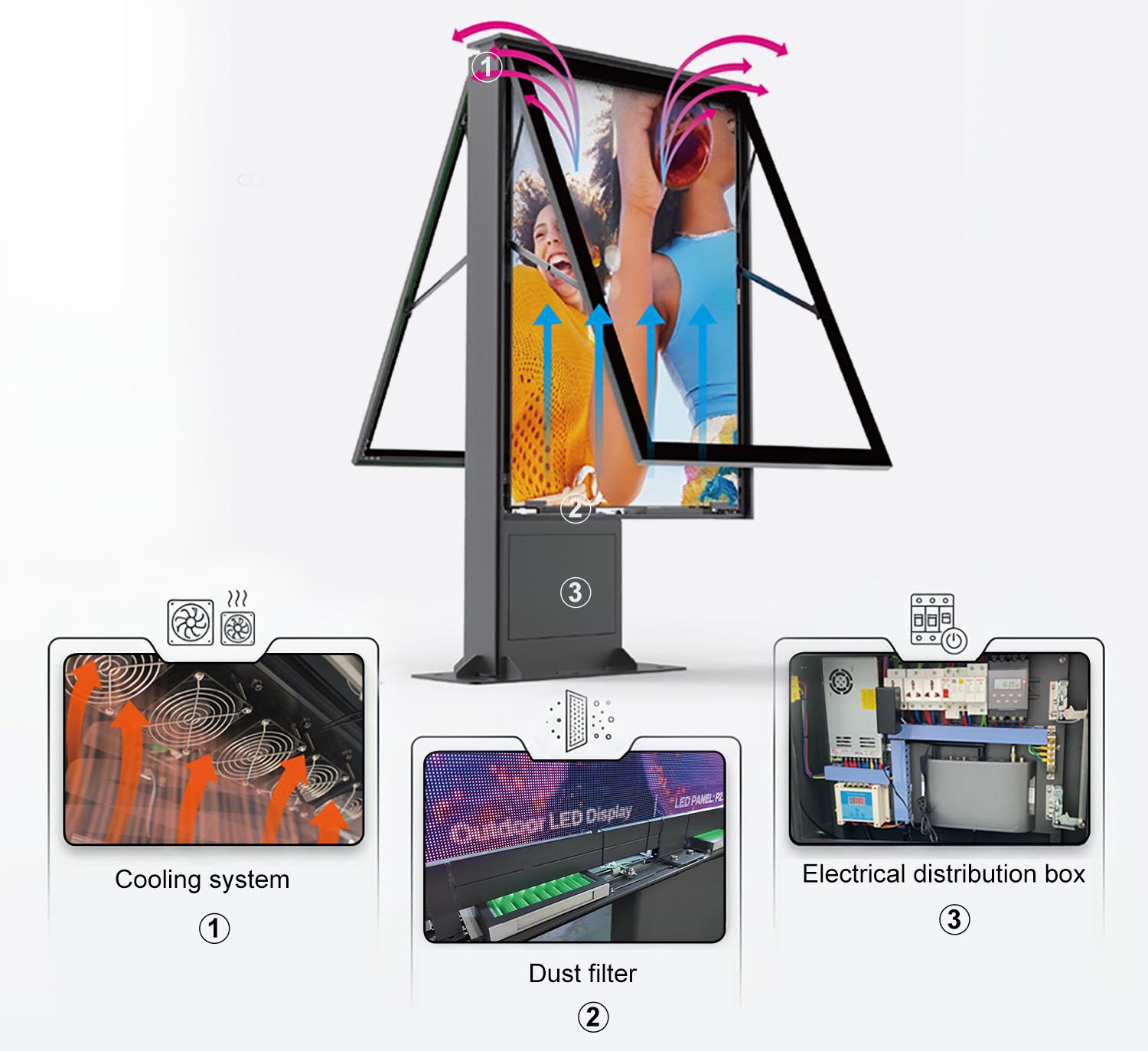
The overall airflow path is:
Bottom Air Intake → Dust Filtration → Internal Air Duct → Independent Front Cooling Channel → Top Exhaust
Fresh air first enters through the bottom air intake of the enclosure.
Before entering the internal space, the incoming air passes through a dust filter, providing initial filtration to help reduce the entry of dust, debris, and other external particles.
This design allows fresh air to enter the enclosure while also addressing the environmental protection requirements of outdoor display equipment.
After passing through the dust filter, the air enters the enclosure and moves upward through a dedicated internal air duct.
Rather than allowing air to circulate randomly inside the enclosure, a defined air duct helps establish a clearer airflow path and directs air toward areas where heat exchange is required.
This controlled airflow path is an important part of the overall outdoor display thermal management design.
An independent front cooling channel is positioned at the front of the display to help remove heat from the screen surface.
This separate cooling path works together with the main airflow route inside the enclosure, providing an additional path for heat removal around the display area.
As air absorbs heat inside the enclosure, it becomes heated and moves toward the upper section of the display.
The top exhaust system then discharges the heated air from the enclosure, helping reduce prolonged retention of hot air inside the display.
Together, these components establish a continuous airflow path from intake to exhaust:
Bottom Air Intake → Dust Filtration → Internal Air Duct → Independent Front Cooling Channel → Top Exhaust
One of the key observations from CNLC's airflow visualization test is the speed of air circulation inside the enclosure.
Under the tested configuration, the complete airflow circulation from air intake to exhaust takes approximately 2–3 seconds. Rapid air exchange helps continuously move heat out of the enclosure rather than allowing heated air to remain inside for an extended period. This can help reduce prolonged heat accumulation during continuous operation.
It is important to note that the 2–3 second figure represents the airflow circulation observed under the tested configuration. Actual airflow speed may vary depending on factors such as display structure, fan configuration, environmental conditions, and installation method. It should therefore not be interpreted as a fixed airflow parameter for all outdoor displays.
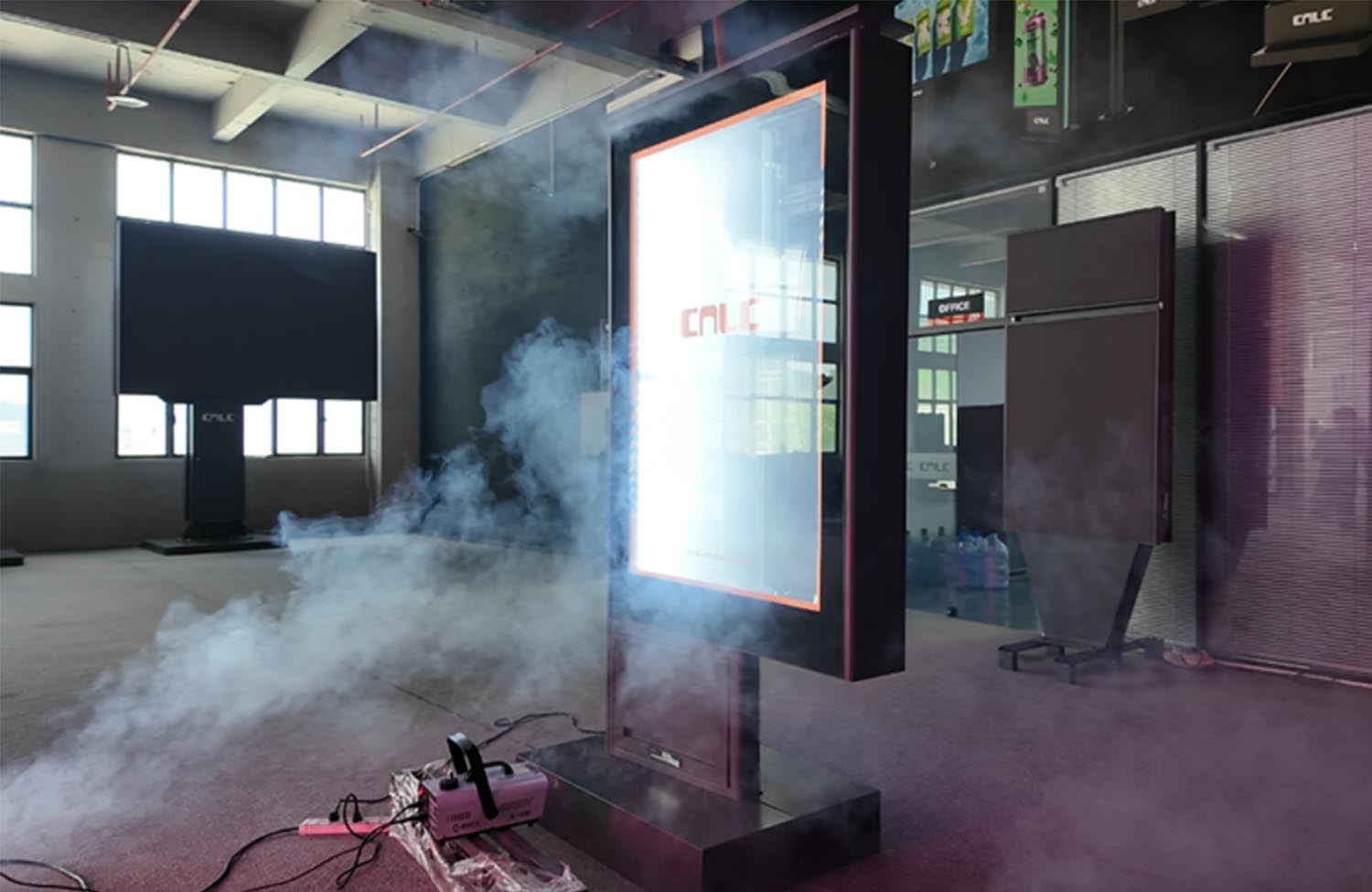
Air movement inside a display enclosure cannot normally be observed directly.
To better understand how air actually moves through the enclosure, CNLC uses a smoke-based airflow visualization test.
Smoke makes the otherwise invisible airflow easier to observe, allowing engineers to see the actual airflow direction and circulation path inside the display.
The test can help visualize:
This visualization method provides a more direct way to observe the actual airflow behavior of the display rather than relying solely on theoretical airflow design.
The purpose of an outdoor display cooling system is not simply to make air move. More importantly, it needs to establish an effective heat removal path.
By combining the bottom air intake, internal air duct, independent front cooling channel, and top exhaust, CNLC's airflow design creates a continuous air exchange path through the enclosure.
In the tested configuration, the approximately 2–3 second airflow circulation helps continuously move heat out of the enclosure and reduce prolonged retention of heated air.
The thermal performance of an outdoor display is closely related to the overall enclosure design. Factors such as the location of air intakes and exhaust outlets, fan arrangement, internal air ducts, and separation between different airflow areas can all influence the final thermal management performance.
For outdoor displays, thermal management is not an isolated function. It is part of the overall reliability design.
In addition to heat dissipation, outdoor display equipment needs to address environmental protection, structural design, and long-term operating conditions. CNLC's reliability validation goes beyond checking product specifications. Practical testing is used to observe how the product behaves under specific conditions. The smoke-based airflow visualization test is one of these validation methods. By making the airflow inside the enclosure visible, engineers can more directly observe actual airflow behavior and verify whether the intended cooling path is operating as designed.
Combined with other environmental reliability tests, including high-temperature and solar radiation testing, airflow visualization provides another perspective for evaluating outdoor display performance under demanding operating conditions.
How does an outdoor display handle heat?
A well-designed airflow path is an important foundation of effective thermal management. CNLC's outdoor display airflow design combines a bottom air intake, dust filtration, internal air duct, independent front cooling channel, and top exhaust to establish a continuous airflow path through the enclosure. Under the tested configuration, the airflow circulation from intake to exhaust takes approximately 2–3 seconds, helping continuously move heat out of the enclosure and reduce prolonged heat accumulation. Through smoke-based airflow visualization testing, this airflow path can be observed directly, providing a clearer understanding of how air actually moves through the display enclosure.
For outdoor display equipment, effective thermal management is not simply about adding cooling components. It is about carefully designing where air enters, how it moves through the enclosure, and where heated air is discharged.
Explore CNLC outdoor display products and solutions to learn more about our outdoor display engineering and reliability design.
FAQ

 Telefone : 8613728004632Telefone : 8602082332833
 E-mail : info@cnlcdisplay.com
 PERMANEÇA CONECTADO Receba nossas novidades, ofertas e muito mais...